What is insulin resistance
It is not only about what you eat, it is also about when you eat. This page explains in plain English what happens when you eat, why insulin resistance develops, and why managing insulin matters for health and weight.
What happens when you eat
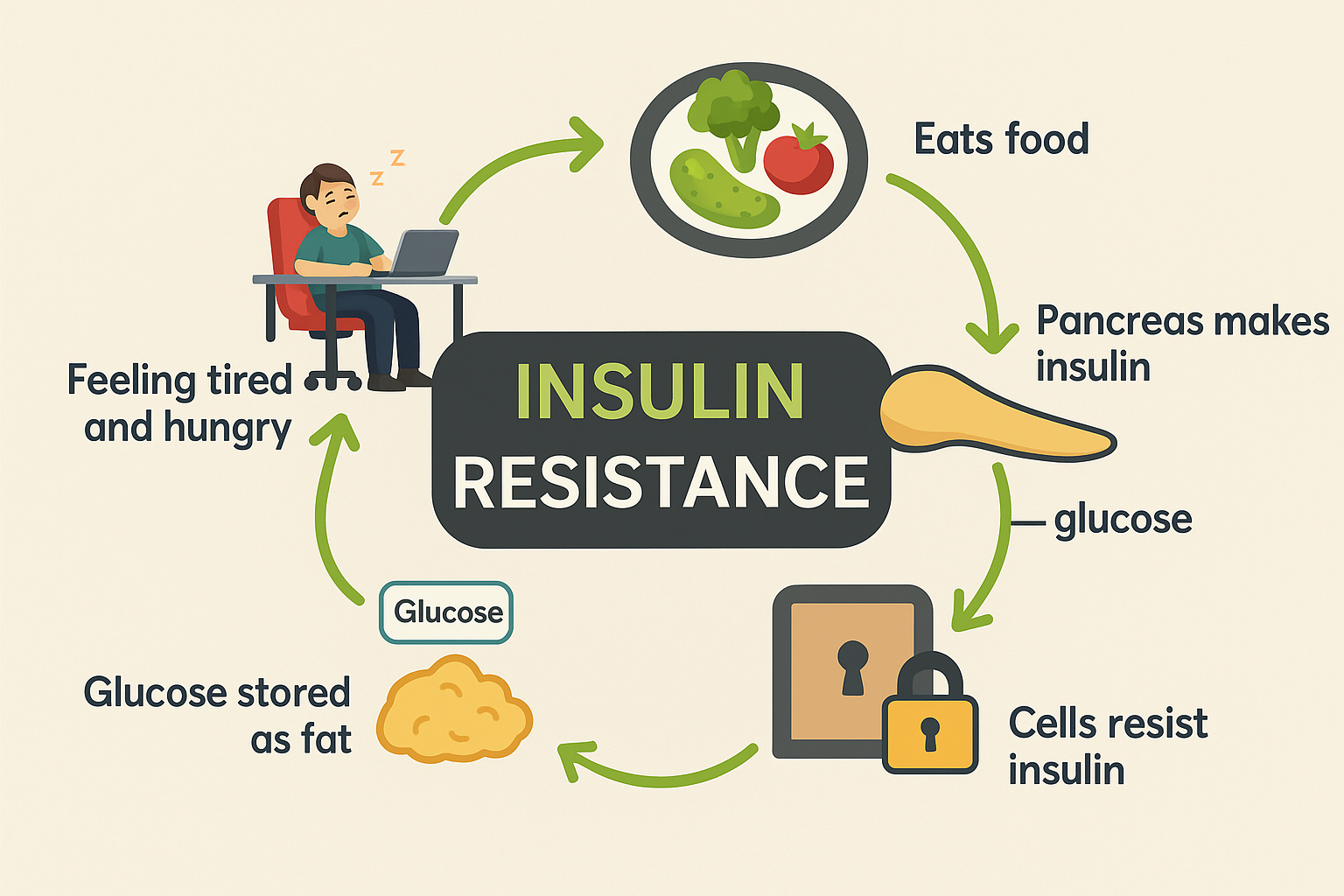
Every time you eat, your body breaks down food into glucose. Glucose is a simple sugar that fuels your muscles, organs, and brain. It is not only carbohydrates. Even protein and fat can be converted into glucose if needed.
As glucose rises in the blood, the pancreas releases the hormone insulin. Insulin is often called a fat-storing hormone because its job is to move glucose out of the blood and into your cells for immediate energy or storage. Insulin touches almost every cell in the body.
When we eat too often
If you eat meals and snacks too frequently, insulin never has a chance to drop. That means your body never fully switches into using stored energy. Over time, cells become less responsive to insulin. This is called insulin resistance.
At first, the pancreas simply produces more insulin to force glucose into cells. When blood sugar is still too high, the body begins storing it elsewhere:
- Liver fat (fatty liver): excess glucose is turned into fat and stored in the liver.
- Visceral fat: fat stored around the organs. From Latin viscera, meaning “internal organs”.
- Subcutaneous fat: fat stored under the skin. From Latin sub meaning under and cutis meaning skin.
This is why we gain weight. The body is constantly trying to find somewhere to store unused energy.
How diabetes develops
When cells stop accepting insulin and storage sites are full, blood sugar rises dangerously high. To protect itself, the body starts flushing glucose out through the urine. That is why uncontrolled diabetes causes frequent urination, often with sweet-smelling urine.
The word diabetes comes from the Greek for “to pass through” because of constant urination. Mellitus means “honey-sweet” in Latin because ancient Indian doctors noticed ants and insects were drawn to the urine of patients. The constant urination also makes people very thirsty because the body is using fluid from tissues to get rid of the excess sugar.
How the Feel Great System helps
You could practise fasting and fibre intake without products, but the system makes it simpler and more sustainable:
- Unimate: A concentrated yerba mate drink. It supports focus and helps manage hunger during a fasting window, making it easier to go longer without food.
- Balance: A patented fibre matrix taken before meals. It slows how quickly food is turned into glucose so insulin does not have to spike as high.
To get the same fibre effect naturally, you would need to eat the equivalent of about two large bowls of vegetables before each meal. That is not realistic for most people. And while fasting without support is possible with plain water, tea, or black coffee, many find hunger and low energy make it hard to stick to. The Feel Great System simply makes the process smoother.
Ready to try?
Support your fasting window and manage glucose impact with a simple, proven routine.